As I’ve mentioned on here before I’ve started running a Repair Cafe, and we have seen all sorts of interesting stuff come through the door. The more I have seen the more I’ve been able to learn and this has given me more confidence in tackling them. I’ve also learned a lot about common failure modes in various devices and how similar many of them are.
There’s an old superstitious saying that “things come in threes” and whilst I don’t believe in all that stuff we have certainly seen a few trios of similar devices. This time I’m going to talk about ‘steam generator’ irons, which are the type which have a large external water tank and an iron with a large cord connecting them. They are usually fairly expensive and are used by people who do a lot of ironing.
We have had three of these come in – a Philips PerfectCare Elite Silence (GC9650/80), a Hinari HIN001 and and a Morphy Richards Power Steam Elite. These are difficult to identify because the manufacturers reuse the same names for different models over time, although I think often the internals are very similar.

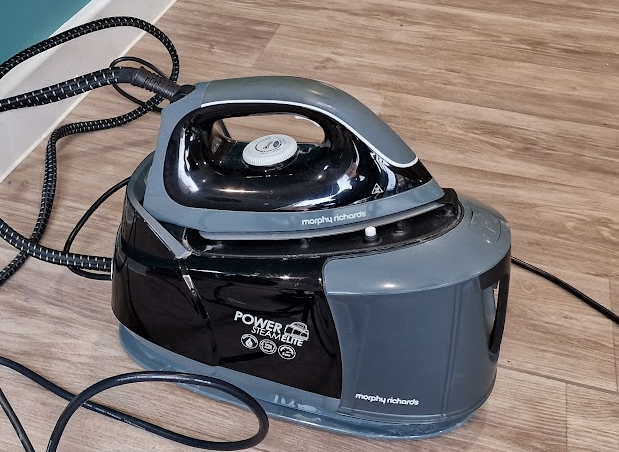
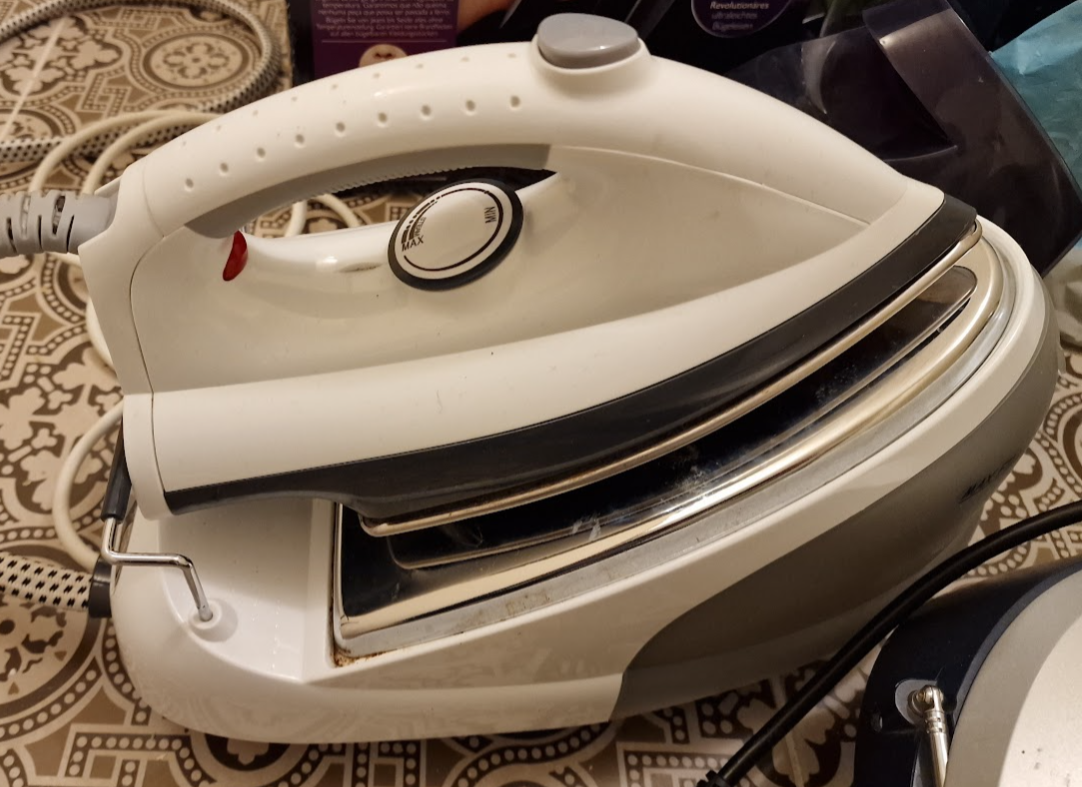
All of them came in with the same issue – no steam from the iron, but some evidence of heat in the tank section. However the solutions proved to be somewhat different but before doing that let’s explore how these irons actually work.
The basic principle is the same, in that the tank section holds a water reservoir and a boiler, and the iron handset has its own heating element. However, what happens next depends on the quality of the irons. The simplest / cheapest devices (like the Hinari shown above) work by pumping the water from the reservoir directly into the boiler when a button on the iron is pressed, which boils rapidly and then comes out of the iron. This is simple, but uses a lot of water and also there can be quite a delay as you wait for the water to boil and come down the tubes. From looking at various things I’ve found online I think there is an even simpler version which does not have a boiler at all and just pumps water into the handheld iron where it boils in the same way as a smaller ‘all in one’ steam iron. The only real advantage here is a bigger water tank.
The next step up is a ‘constant steam’ iron (The Philips one above) where the water is automatically pumped into the boiler and steam is generated which is then held at pressure, and released on demand into the iron when the button is pressed. There is a solenoid valve which controls the release of steam.
The top of the range also includes an automatic descaling mechanism (as on the Morphy Richards example) where there is a second set of valves and water tanks which periodically redirects steam through the internal tubing and valves to blast scale out and into a waste tank.
As you would expect the internals become progressively more complicated as you go along, so I’ll explain this and then the fix. The Hinari iron looks like this:

The pump takes water in from the tank through the small hose at the bottom of the picture and through the thick hose into the top of the boiler. Steam comes out of the other thick hose which comes out of the top of the boiler and down the umbilical cord which goes off to the iron on the left hand side of the picture.
Given the simplicity, it’s also pretty easy to repair. There are really only two things that can go wrong, one is the boiler and the other is the pump. If the boiler isn’t heating up, then there is either a problem with the power connection or the element itself – the former is easy if you can see the break or problem, but in the latter case I’m not sure that there is anything that can be done short of finding a replacement. In the one I saw, the pump had failed – it was making a buzzing noise but no water was moving. I could feel that the boiler was warming up though, which was a good sign. The first thing to do was extract the old one. It’s not easy to see on the picture but it was connected with three wires with spade / FASTON connectors which simply pulled off, and two hoses which again could be pulled off with a bit of effort. Once this was done it could be extracted easily:
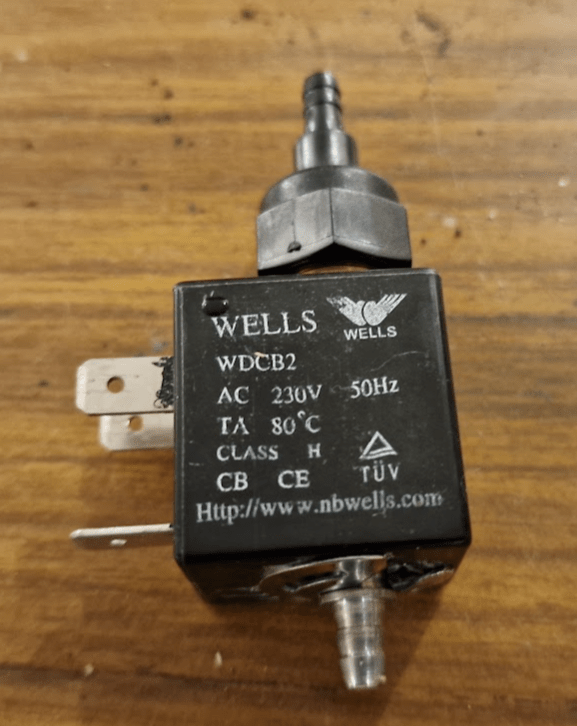
The markings on the pump were pretty clear, but it also proved difficult to source the exact one. The http://www.nbwells.com website no longer exists and I couldn’t easily find the model number. However a quick browse on Aliexpress revealed a large number of apparently identical and inexpensive replacements:
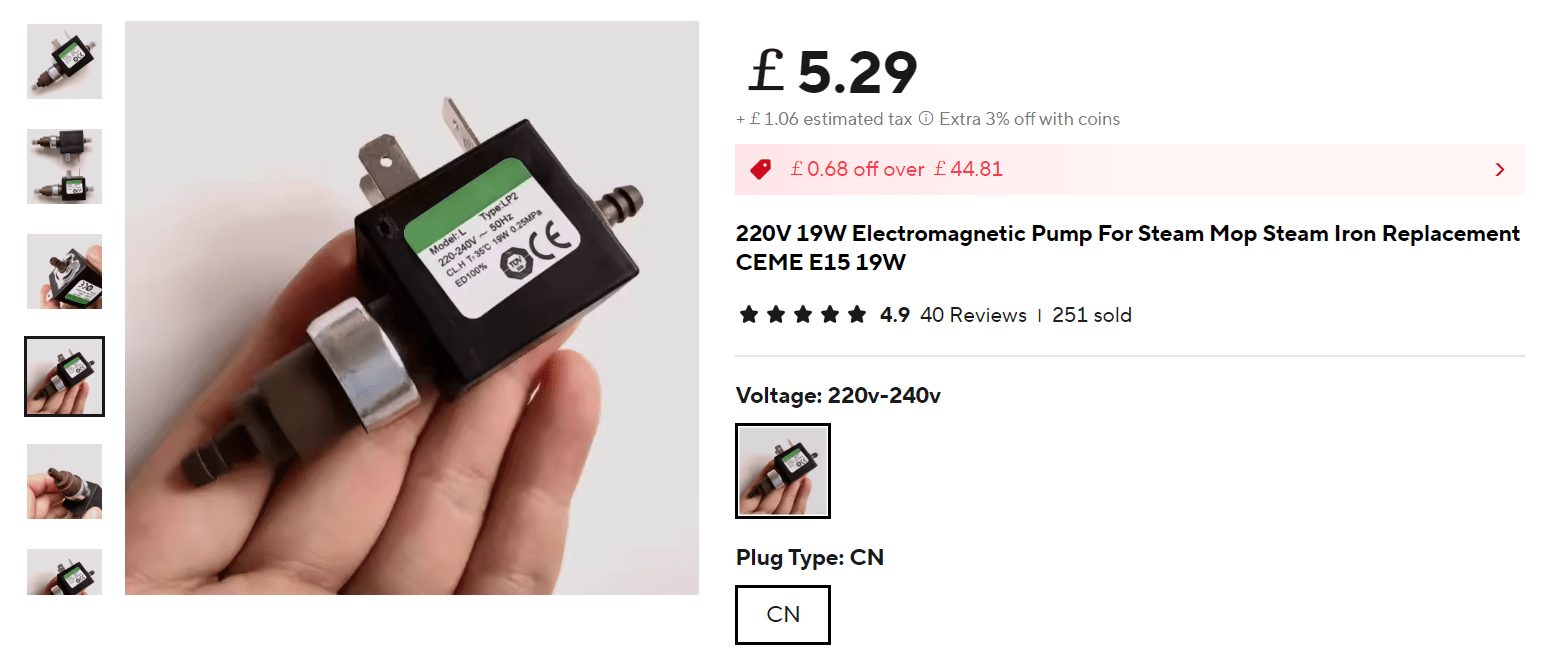
It would seem that these are commonly used in this type of iron as well as in steam mops and other similar devices where water needs pumping around. The services from Aliexpress these days is pretty good and the new one arrived in about 10 days. Fitting it was a simple process, although I did find that the direction of flow appeared to be reversed compared to the original. So if you try this repair and it doesn’t seem to work, try swapping the hoses over. I tested the motor by putting the tank hose in a glass of water and found it was blowing bubbles rather than sucking!
So next up is the Philips iron. This is considerably more complicated although most of it is the control electronics:
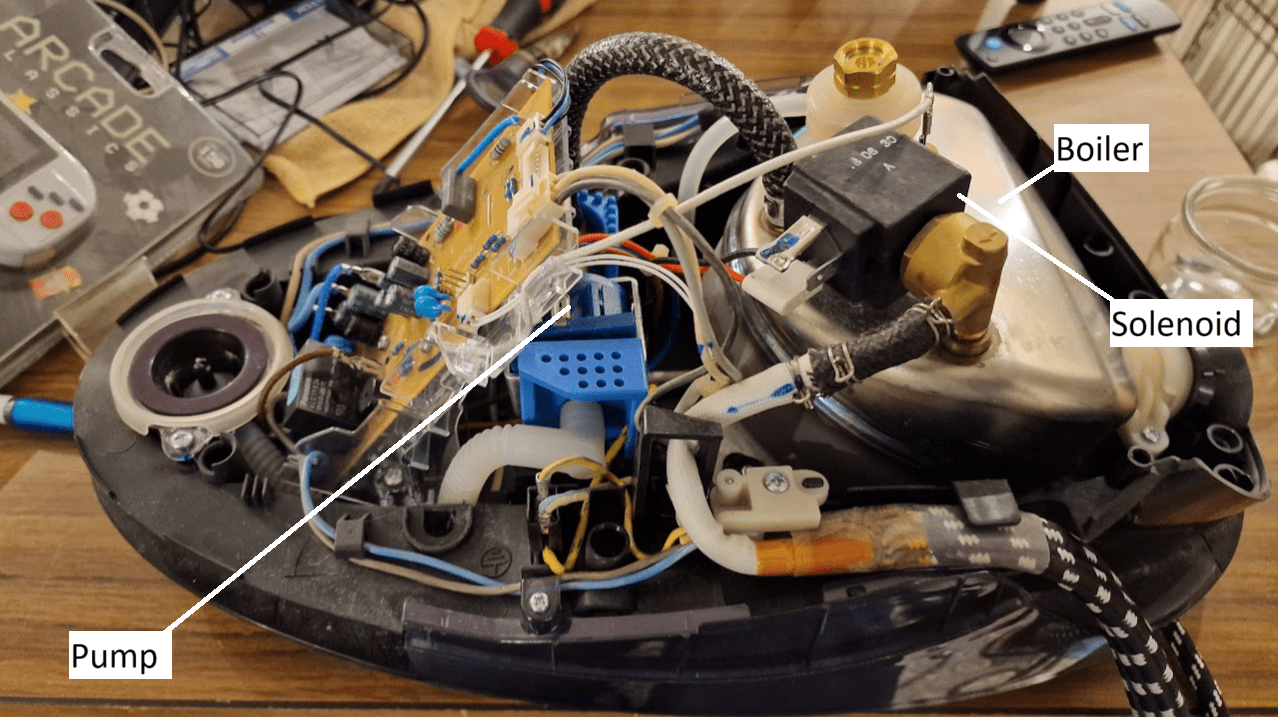
The boiler is similar to the other one, being a large metal container and the pump is also similar and pumps water from the tank into the boiler. However what’s different here is that there is a valve at the exit from the boiler which is controlled by a solenoid, in effect an electromagnet which opens the valve when energised. In this example, when the solenoid is open the steam is allowed through to the iron. You could hear the water boiling when switched on so the pump was clearly OK. The usual failure point for these is not the valve itself (the metal section) but the coil which acutates the valve (the black plastic box). The valve assembly is in two parts, the metal section screws into the boiler and the coil slides over it and is held in place with a bolt. This means that you can change the coil without disturbing the valve and this usually makes the job much easier.
However, in this iron there is a problem because there is not enough space to slide the coil off because there is another hose in the way. This picture shows the coil partially removed but blocked:

The solution here is unscrew the valve stem from the rest of the body. In the picture above you can see that the stem of the valve is screwed into the body and a large nut is visible. What I had to do was unbolt this, which allows the stem to be removed with the the coil on it. I’m not sure I would have worked this out myself but I found an excellent Youtube video demonstrating this.
It’s not exactly the same model but the principle is the same. Also the video narration is not in English but the Youtube automatic subtitling did an excellent job. In the video, he replaces the whole valve assembly, but I didn’t find this to be necessary as it was only the coil that was faulty.
These appear to almost universal parts, all labelled as Jiayin JYZ-5 and are easy to find on AliExpress at a very reasonable price:
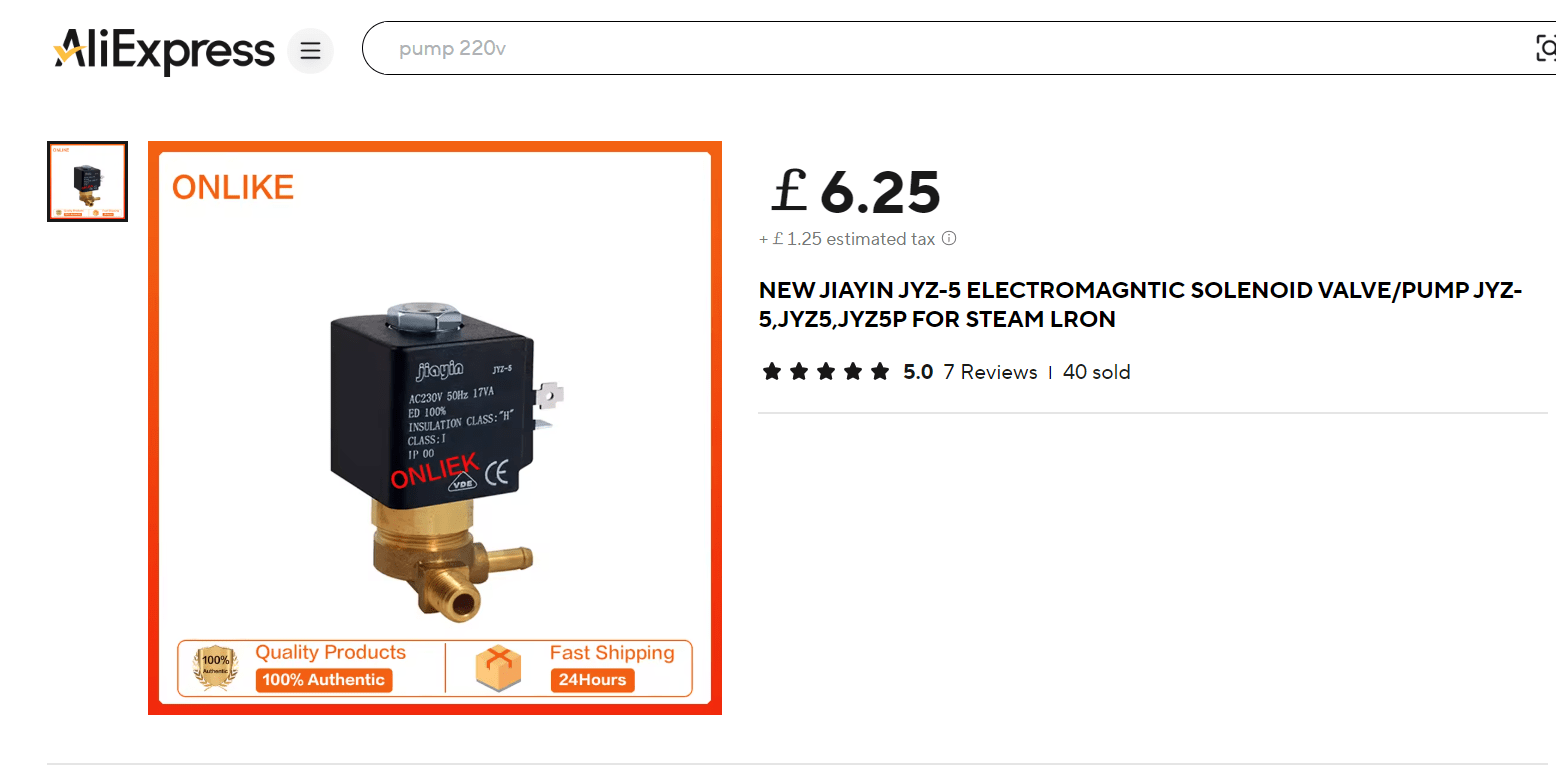
I have found the service from these sellers to be remarkably good given the distances involved, and often the part will arrive within about a week of ordering with thorough tracking available. Once it arrived it was simply a question of unbolting the coil from the new one and swapping with the old one, and reconnecting it in the same way as the original. I also cleaned and lubricated the valve itself whilst unbolted although really it appeared in excellent condition. After reassembly and testing I was pleased to find that steam was flowing once more.
Then finally the Morphy Richards iron. This has the (hopefully by now familiar) arrangement of pump and boiler but has two solenoid valves:

The left hand (black) one is concerned with the descaling mechanism, and the right hand (red) one is for releasing steam to the iron. In this one, neither the descaling nor the steam were working. Youtube came to the rescue again and I found a series of helpful videos about these irons.
In essence, the descaling mechanism works by periodically redirecting the steam back through the pipes, blasting any bits of scale into a waste water tank. This uses a solenoid valve again with a metal plunger with a rubber seal on it. What appears to happen here is that the plunger gets stuck in the valve, leaving it permanently closed. So the solution is to strip the valve down and free the plunger, first by unbolting and removing the coil, and then by unscrewing the stem from the valve body. They are quite stiff and you have to be careful when unbolting them not to catch you fingers on the sharp plastic edges of the case. In the one I saw the plunger was stuck fast and needed a good tug to free it. I also replaced the coil on the other valve to address the steam release issue, although it was a slightly different part being a Jiayin JYZ-3. The coils do seem to be slightly different sizes so important to ensure you order the correct one. Again, on reassembly I was pleased to find the iron was back to full working order.
So overall I have learned a lot in working through these and I now feel I understand them well. It is interesting the the failure modes seem common no matter which manufacturer or model, and also that they all seem to use the same underlying parts and this is good news for repairs. I hope this is helpful if you are facing something similar, do please let me know in the comments of your experiences!
 Universal Discovery Methodology